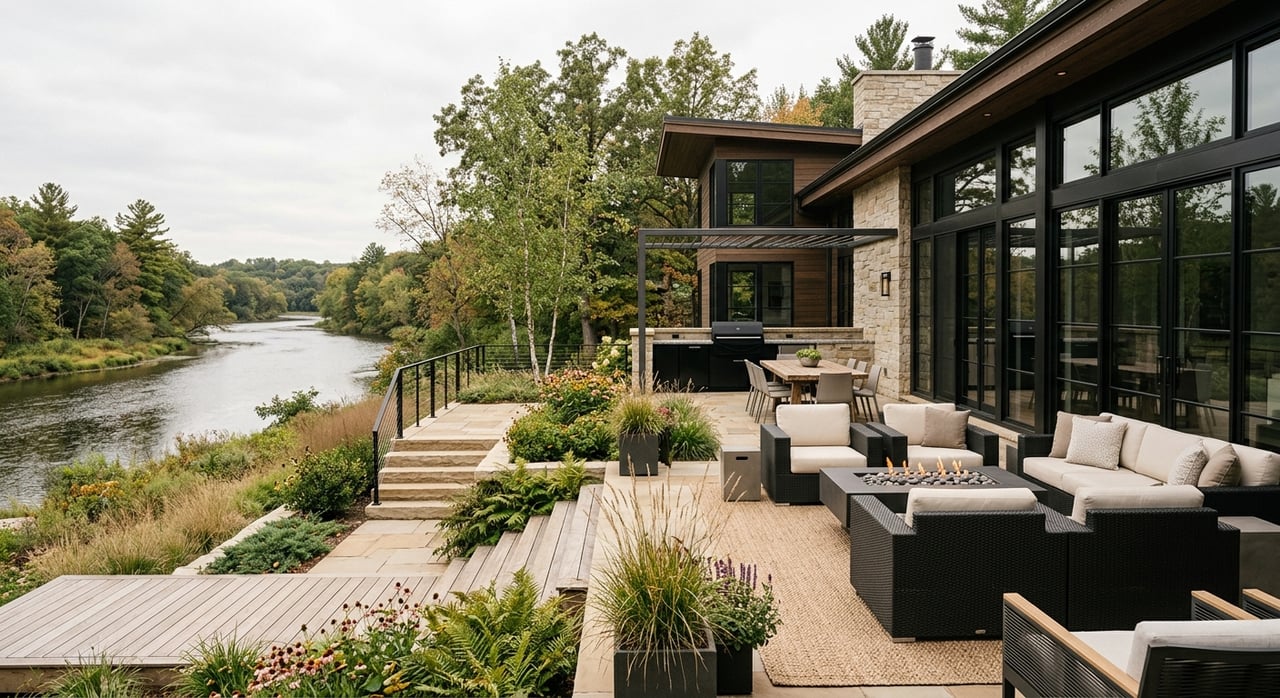
If you are marketing a riverfront development in Stillwater, you are not just selling square footage or views. You are positioning a lifestyle shaped by the St. Croix River, a historic downtown, and a city that takes design context seriously. For buyers, that combination can be compelling, but only when the story, product, and location are aligned. Let’s look at how to position riverfront developments in Stillwater for today’s buyers.
Why Stillwater Stands Out
Stillwater offers a mix that is hard to replicate in the Twin Cities region. The city sits about 20 miles east of downtown St. Paul and describes itself as a place where St. Croix River bluffs, Twin Cities access, and small-town amenities come together. That setting gives riverfront projects a strong starting point, especially for buyers who want both natural surroundings and a connected daily lifestyle.
The city’s long-range planning also supports a place-based narrative. Stillwater’s 2040 Comprehensive Plan includes dedicated focus on historic resources, downtown, parks and trails, transportation, and water resources. For buyers, that signals a community where the riverfront is part of a larger vision rather than an isolated amenity.
Lead With Place, Not Just Product
A riverfront development in Stillwater should be framed around the experience of living there. Buyers are often drawn to what their day-to-day life will feel like, not only to finishes, floor plans, or a rooftop rendering. In Stillwater, that means highlighting the connection between home, river, trails, downtown, and public spaces.
The St. Croix National Scenic Riverway is a major part of that story. The National Park Service describes it as more than 200 miles of clean water with paddling, boating, fishing, hiking, camping, and historic towns along the corridor. That broader context helps buyers understand that a Stillwater riverfront address is tied to a nationally recognized natural asset, not just a local view corridor.
River Access Is a Real Selling Point
For many buyers, the difference between a good location and a memorable one comes down to usable access. Stillwater’s appeal is strengthened by tangible public investments that make the river more accessible. That is important because buyers respond well when lifestyle promises are backed by real infrastructure.
The city’s Lumberjack Landing plan covers 15 acres and about three-quarters of a mile of St. Croix shoreline. Plans include pedestrian river access points, an accessible fishing pier, a kayak and canoe launch, patios, picnic areas, trails, and a connection to Browns Creek State Trail. For a nearby development, those features support a strong everyday-lifestyle message.
The area is also seeing expanded boating access. The Minnesota DNR opened the St. Croix Crossing public water access in 2025 with 35 trailer and parking spots and a double launch, adding another layer of convenience for buyers who want direct access to the water. These are the kinds of practical details that make riverfront living feel more complete and credible.
Trails and Walkability Strengthen Buyer Appeal
Stillwater’s river story is not only about being on the water. It is also about how easily buyers can move through the city on foot or by bike. That matters for purchasers who want an active, connected lifestyle and who value access to outdoor amenities without getting in the car.
The historic lift bridge, which has crossed the river since 1931, reopened in 2020 for pedestrians and bicycles and connects to the Loop Trail. The city also notes that Browns Creek State Trail is 5.9 miles long and connects Gateway State Trail to the Riverway in Stillwater. When you position a development, these connections can help buyers picture morning walks, bike rides, and easy recreation as part of daily life.
Downtown Adds Everyday Energy
A strong riverfront development story in Stillwater should also include downtown. Buyers often want more than scenic beauty. They want places to gather, dine, browse, and spend time close to home. Stillwater’s downtown gives riverfront projects an urban-lite convenience factor that adds depth to the buying decision.
According to Explore Minnesota via the city’s municipal boat dock page, Stillwater’s boutique district spans five blocks with more than 50 independent stores just a block from the river, along with cafes, nightlife, and places to stay. The municipal boat dock itself has 16 slips, including four overnight slips. The city has also explored a downtown social district, which was authorized by the Minnesota Legislature in 2024.
For buyers, this helps support a simple but effective idea: in Stillwater, riverfront living is not remote. It is connected to a real downtown experience.
Historic Context Matters
One of the biggest positioning mistakes in Stillwater is treating a riverfront project like it could be dropped into any waterfront market. Stillwater’s identity is tied to its historic fabric, and buyers who are drawn to the city often value authenticity. That means new development tends to resonate more when it feels grounded in place.
The Stillwater Commercial Historic District was listed on the National Register of Historic Places in 1992 and is also locally designated. The district represents a period of significance from the 1860s through 1911. The city’s Downtown Design Review Overlay District promotes development that retains Stillwater’s historic rivertown image and fits the St. Croix Valley setting.
For buyers, this can be a positive. It suggests that the city is intentional about design quality, materials, pedestrian experience, and overall compatibility. For developers and marketers, it means contextual design is not just a planning issue. It is part of the value proposition.
Design Should Feel Contextual
In Stillwater, buyers are likely to respond better to thoughtful design than to generic luxury language. Terms like “exclusive” and “one-of-a-kind” can fall flat if the architecture does not reflect the setting. A stronger approach is to show how the project relates to the city’s scale, materials, and streetscape while still offering modern comfort.
A useful local example is the city’s summary for 200 Chestnut St E. The 61-unit residential project was described with a lobby oriented to Chestnut Street, a club room, an outdoor patio, a stepped-back upper level, and terrace views of downtown rooftops and the bluff. The summary also notes that the design draws heavily from 19th-century downtown character and uses warm masonry and vertically proportioned windows.
That is a helpful clue for positioning. In Stillwater, the strongest story is often contextual modernism, not architecture that competes with the historic setting.
Address Permitting and Constraints Early
Sophisticated buyers and development partners appreciate transparency. In Stillwater, permitting and preservation rules can affect timeline, design, and expectations, especially near downtown or in historically sensitive areas. Instead of treating these factors like obstacles to hide, it is smarter to package them as evidence of careful planning and civic alignment.
The city’s design permitting guidance states that exterior alterations in the commercial historic district require design permits, and most exterior alterations in the downtown overlay require permits. The city also controls demolition in the neighborhood conservation district and generally prohibits exterior demolition of structures built before 1946.
For buyers, this can signal stability and protection of neighborhood character. For project positioning, it reinforces the value of a development that has already navigated local context thoughtfully.
Flood and Shoreline Readiness Build Confidence
Riverfront buyers are often practical buyers. They may love the setting, but they also want to understand risk, insurance, and long-term usability. That makes flood-zone clarity an important part of the conversation.
Stillwater notes that FEMA revised Washington County flood maps and that most of the city remained in Zone X. The city also encourages owners to verify a property’s flood zone through its flood map resources and states that federal flood insurance is available throughout the community. A well-positioned riverfront development should make this information easy to understand and easy to verify.
When buyers see that a project team has addressed shoreline and flood considerations clearly, confidence tends to rise. In a riverfront setting, practical reassurance supports emotional appeal.
Use Market Data Carefully
Market data can help support a positioning strategy, but it should be used with precision. Stillwater and the 55082 area appear relatively competitive, though reports vary by geography and timing. That means broad claims should be avoided in favor of measured, factual context.
The research available shows active interest in the area, with recent reports citing median listing or sale prices in the upper-$400,000 range for Stillwater and median days on market generally ranging from around 50 to the upper 70s depending on source and timeframe. Washington County’s March 2026 update showed a median sales price of $416,950, 50 days on market, 98.4% of original list price received, and 2.0 months supply of inventory.
For buyers, this suggests that Stillwater remains a market where quality and location matter. For developers, it supports a positioning strategy built on differentiation rather than volume messaging.
Three Messaging Priorities for Buyers
If you are positioning a riverfront development in Stillwater, three themes stand out.
Align With Historic Fabric
Buyers should see that the project belongs in Stillwater. Materials, massing, windows, public-facing design, and street relationship all shape whether a development feels authentic to the setting.
Highlight River and Trail Lifestyle
The riverfront story works best when it is specific. Public access points, trails, launch areas, pedestrian routes, and downtown proximity help buyers picture how they will actually use the location.
Build a Place-Based Narrative
Stillwater has a strong story rooted in the river, the lumber era, and its preserved downtown. Positioning should connect the project to that identity in a way that feels modern, grounded, and credible.
Why This Positioning Works
Stillwater is not best marketed as generic waterfront luxury. It is better positioned as a place where design, history, recreation, and downtown energy meet along one of the region’s most recognizable river corridors. That gives buyers something more lasting than a view. It gives them a sense of place.
For developers, sellers, and buyers evaluating distinctive opportunities in Stillwater, thoughtful positioning can shape not just attention, but confidence. If you want a more refined strategy for marketing or evaluating riverfront opportunities in this market, Juan Rivera offers a design-minded, data-informed approach tailored to place.
FAQs
How should buyers evaluate a riverfront development in Stillwater?
- Look at more than views. Pay attention to river access, trail connections, downtown proximity, design compatibility, permitting context, and flood-zone information.
What makes Stillwater riverfront property different from other waterfront markets?
- Stillwater combines St. Croix River access, a historic downtown, trail connectivity, and city-led design standards that support a strong sense of place.
Why does historic context matter for new developments in Stillwater?
- The city has a nationally recognized historic district and local design review standards, so buyers often value projects that reflect Stillwater’s established character.
What lifestyle features support buyer demand in Stillwater?
- Key features include the St. Croix National Scenic Riverway, the pedestrian and bicycle lift bridge, Browns Creek State Trail, Lumberjack Landing improvements, and walkable downtown amenities.
What should buyers know about flood considerations for Stillwater riverfront homes?
- The city says most of Stillwater remained in Zone X after revised FEMA maps, but buyers should verify a property’s flood zone through the city’s lookup resources and review insurance options as part of due diligence.