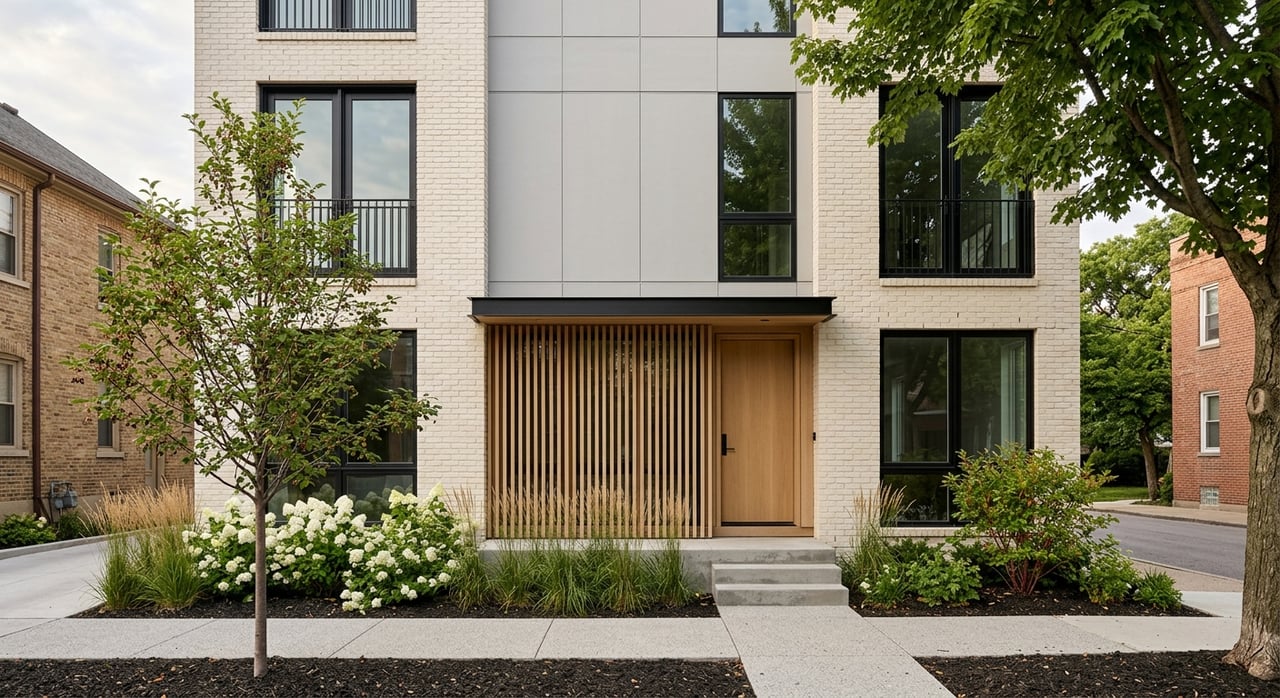
If you have been watching new construction in Minneapolis, you have probably noticed a shift. The most compelling new homes are not always the biggest projects or the tallest buildings. More often, they are smaller boutique developments that feel carefully tailored to the block, easier to live in, and more intentional in the details.
For buyers, sellers, and developers, that change matters. It says a lot about what people want now: less wasted space, stronger design, better energy performance, and a home that feels connected to the neighborhood. In this guide, you will see the design trends shaping boutique new construction in Minneapolis and why they matter in today’s market. Let’s dive in.
Why boutique projects fit Minneapolis
Minneapolis has a local framework that naturally supports smaller-scale residential development. The city says its updated land-use regulations, adopted in July 2023, created a more streamlined zoning code with fewer chapters, fewer zoning districts, and fewer situations requiring special approval.
The city’s built-form handbook also notes that Interior 1 and Interior 2 districts are intended for small-scale residential buildings, with up to three dwelling units on individual lots and typical heights of 1 to 2.5 stories. In practical terms, that supports projects that feel more residential in scale and more in step with existing streetscapes.
Another important factor is project size. Minneapolis says its inclusionary zoning rules apply to new housing projects with 20 or more units, which makes unit count a meaningful planning decision for builders who want to stay in a boutique format.
That helps explain why many newer infill projects in Minneapolis look less like large apartment-style buildings and more like refined, house-scaled residences. From the street, they often aim to blend in. Inside, they are designed to feel elevated, efficient, and highly livable.
Buyers want rightsized living
One of the clearest trends in Minneapolis new construction is the move toward homes that are rightsized rather than oversized. Buyers still want comfort and style, but they are often looking for less maintenance and more usable space.
Local reporting in 2024 showed strong interest in new-construction townhomes, in part because they are more attainable than detached houses. In July 2024, the median sales price for a new-construction townhouse was $380,000, compared with $529,190 for a new single-family house.
That price gap matters, but so does the lifestyle. Buyers are drawn to homes that offer privacy, practical layouts, and easier upkeep without giving up thoughtful design.
Attached housing also plays a meaningful role across the broader Twin Cities market. Minneapolis Area Realtors reported that townhouse-condo attached homes made up 23.8 percent of market share across the 16-county region in 2024, and 40.4 percent in Minneapolis-Calhoun Isles.
At the same time, attached homes took longer to sell on average than detached homes, with 54 days on market versus 42. That tells you something important: boutique attached housing can succeed, but it usually needs stronger positioning, clearer identity, and better design differentiation.
House-like features matter more
Because attached housing can face more competition, the best boutique projects tend to borrow cues from single-family living. Builders have responded by adding details that make these homes feel more private and more complete.
Recent local reporting pointed to features such as airspace between walls for better sound control, private outdoor space, mudrooms, and multiple entries. Those choices solve daily quality-of-life issues, which is often what buyers remember most after a tour.
This is especially relevant in Minneapolis, where many buyers want walkability and convenience but still want a home that feels calm and personal. The more a boutique project can combine urban location with residential comfort, the more compelling it becomes.
Open layouts are getting smarter
Open-concept living is still popular, but the trend has become more refined. Instead of large, undefined spaces, buyers are looking for layouts that feel open while still supporting everyday routines.
National design research cited in the report found that average new-home size fell to 2,411 square feet in 2023, the smallest in 13 years, and that buyers would prefer around 2,070 square feet. The same research showed buyers were most willing to compromise on a formal dining room or home office in exchange for a better price.
In boutique Minneapolis projects, that often translates into flexible rooms instead of single-purpose ones. You may see a den, a built-in work nook, a wider landing, or a multifunctional guest room rather than a formal office or dining space.
That approach works well because it gives you options. A room can shift with your needs, whether you work from home some days, host guests occasionally, or simply want better storage and flow.
Interior finishes feel warmer and more personal
Minneapolis boutique new construction is also moving toward a warmer finish palette. Clean lines still matter, but the look is less stark than it was a few years ago.
Local luxury condo examples show this clearly. At Eleven on the River, designers created curated packages with open kitchens, sleek black finishes, classic paneling, and warmer transitional options. Buyers also had meaningful input on tile, flooring, hardware, and other finishes.
At the Four Seasons private residences, designers used Nordic and Urban palettes, white oak and walnut finishes, herringbone-patterned floors, North American stone, and heated terraces. The design team also emphasized locally made materials and a lower carbon footprint.
Taken together, these examples point to a broader local preference: homes that feel modern, but not cold. In Minneapolis, buyers seem to respond to spaces with texture, natural materials, and customization that feels thoughtful rather than flashy.
Outdoor space is becoming essential
In boutique new construction, outdoor space is no longer just a bonus feature. It is increasingly part of the core design brief.
Minneapolis projects are showing a strong preference for outdoor areas that feel truly usable. A covered and heated loggia at Eleven on the River stood out because it functioned more like an actual entertaining room than a narrow balcony.
Other local examples highlight private patios, decks, and terraces as major selling points. In a market where buyers want both convenience and comfort, outdoor space adds real day-to-day value.
This is especially true when the space feels integrated with the interior. Large openings, good sight lines, and room for seating or dining can make a boutique home feel much larger than its square footage suggests.
Energy performance is part of the appeal
Sustainability is not being treated as an extra in Minneapolis. It is increasingly a baseline expectation.
The Minnesota Department of Labor and Industry says the 2020 Minnesota State Building Code is the minimum construction standard statewide, and that includes the 2020 Minnesota Residential Energy Code. For buyers, that means newer homes start with a stronger performance baseline than many older properties.
The city also supports energy-saving improvements through Green Cost Share rebates and 0% APR loans for items such as insulation, windows, and energy-efficient appliances. While those programs are broader than boutique development alone, they reflect the local emphasis on performance.
In one Lyn-Lake penthouse project, the builder used structural insulated panels in a rooftop structure and paired them with floor-to-ceiling windows. The project was noted for annual heating and cooling costs under $1,000, showing how strong energy performance can work alongside striking design.
Tech features support daily ease
Technology is also shaping what buyers expect in new construction. The strongest features are usually the ones that improve comfort, control, and peace of mind without making the home feel overly complicated.
Research in the report identified growing interest in security cameras, wired security systems, programmable thermostats, video doorbells, multizone HVAC, and energy-management systems. These features support a more efficient and low-maintenance way of living.
In boutique projects, the key is integration. Buyers tend to respond best when technology feels seamless and useful, not like a list of gadgets added for marketing.
The curb-to-interior contrast is intentional
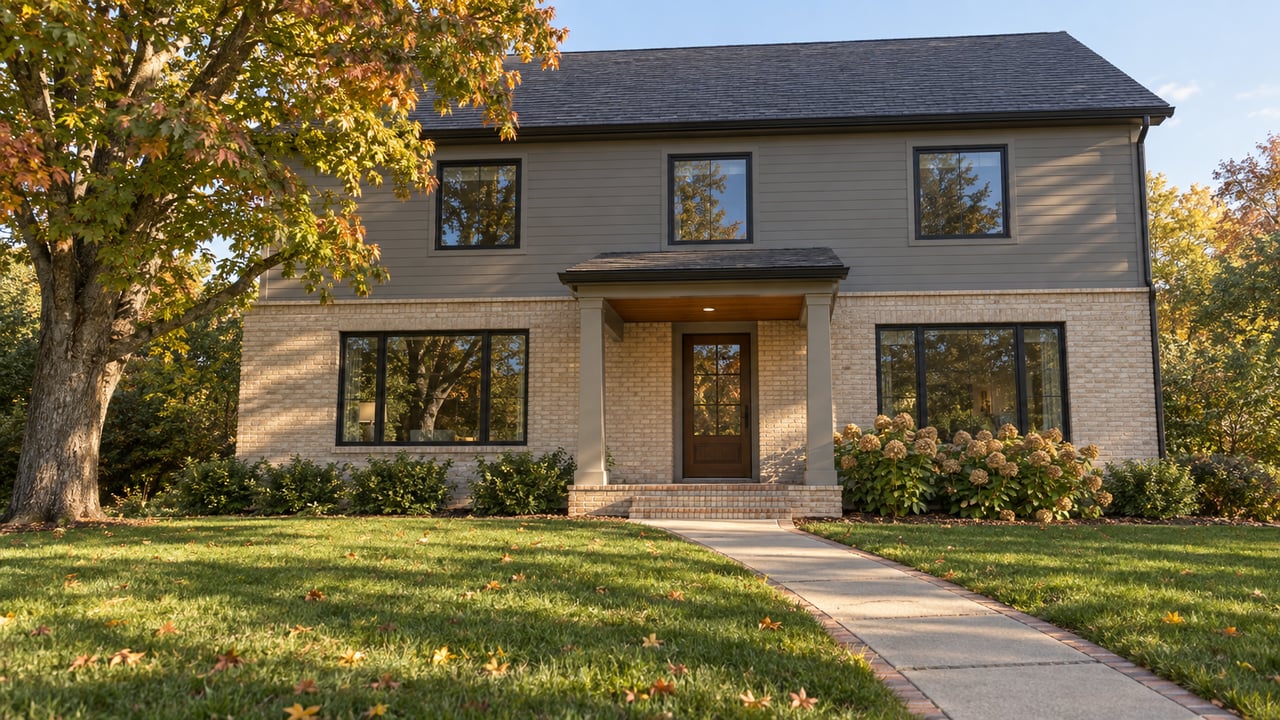
One of the most interesting Minneapolis design patterns is how many boutique infill projects present themselves from the street. Often, they are designed to feel compatible with nearby homes in scale and form, even when the interiors are quite contemporary.
A duplex-style project in Fulton captured this approach well. It was designed to read like a single-family home from the street, while the interior featured open-concept living, quartz countertops, large windows on all four sides, and private patio or deck space.
That balance is a big part of boutique appeal in Minneapolis. The exterior respects context, while the interior delivers the openness, light, and finish quality buyers expect from new construction.
What tends to hold value
In a market where attached homes can take longer to sell, resale durability matters. The features that tend to stand out are not always the most dramatic ones. More often, they are the details that make daily life easier.
Based on the local examples in the research, the most durable choices include quieter walls, low-maintenance exteriors, private outdoor space, flexible rooms, strong natural light, and finish selections that feel custom without becoming too trend-specific.
There is also a location story behind this. Reporting on a 15-unit condo project in Linden Hills noted buyer interest in walkability, proximity to the lakes, and maintenance-free living. When a boutique project combines that kind of neighborhood appeal with thoughtful design, it can stand out even in a slower attached-home segment.
What this means for buyers and sellers
If you are shopping for boutique new construction in Minneapolis, it helps to look beyond surface finishes. The real value often comes from the floor plan, the privacy details, the energy performance, and how well the home fits the neighborhood.
If you are selling or advising on a distinctive new-construction property, presentation matters just as much as the spec sheet. In a segment where attached homes may take longer to absorb, strong storytelling and precise positioning can help buyers understand why a particular home feels different.
The strongest boutique projects in Minneapolis are not trying to be everything to everyone. They are more focused than that. They are designed for buyers who value walkability, comfort, quality materials, and spaces that feel considered from the curb to the kitchen.
If you are thinking about buying, selling, or positioning a boutique new-construction property in Minneapolis, [Juan Rivera] brings a thoughtful, design-led perspective grounded in local market insight.