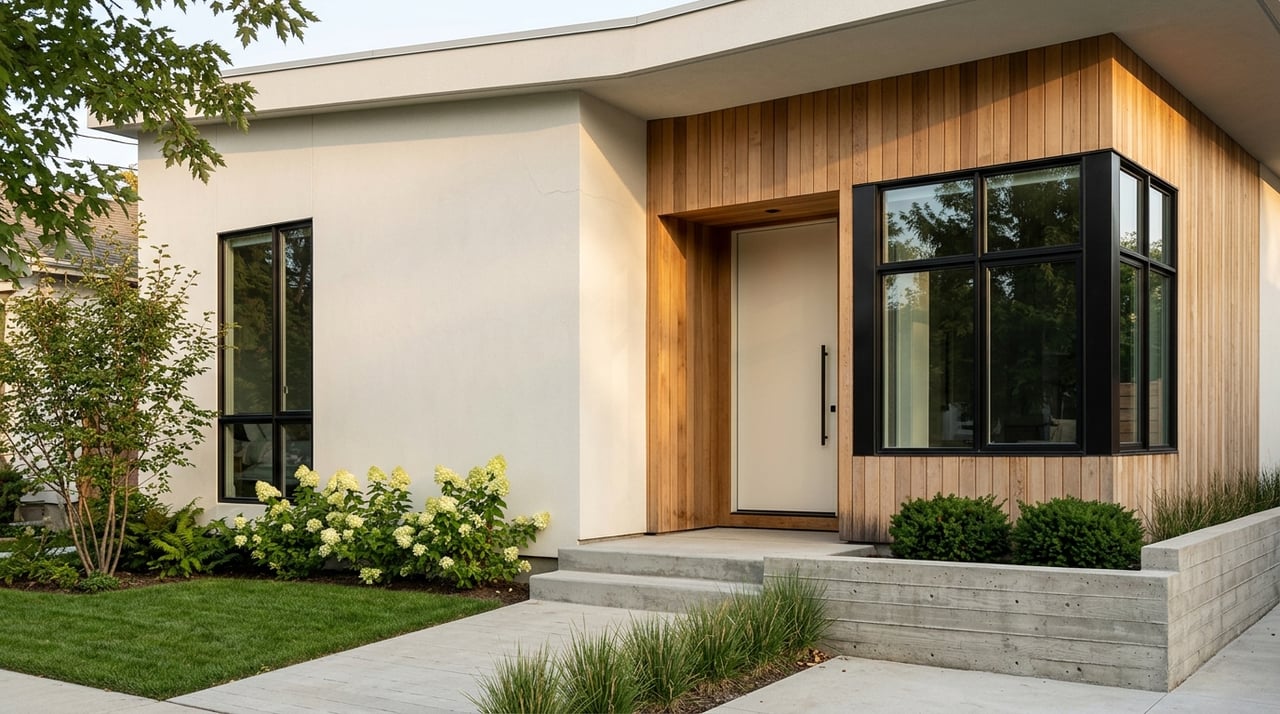
Are you searching for a home in Minneapolis that feels clean-lined, design-forward, and a little more tailored than the city’s classic housing stock? If so, it helps to know that modern and contemporary homes are not spread evenly across Minneapolis. Some of the best options cluster in a few specific neighborhoods, and each area offers a different mix of architecture, setting, and daily lifestyle. Let’s take a closer look.
Modern homes in Minneapolis
If you are looking for modern or contemporary homes in Minneapolis, the biggest takeaway is simple: start with the urban core, then widen your search to select lake neighborhoods.
City zoning and neighborhood planning patterns point to the strongest concentrations of lofts, newer condos, and redevelopment-driven housing in downtown and mixed-use districts. In contrast, lake-area searches tend to uncover a more selective mix of architecturally significant homes, mid-century properties, and smaller pockets of newer condominium development.
That matters because your search strategy may need to change depending on what “modern” means to you. For some buyers, it means an industrial loft with large windows and an open plan. For others, it means a mid-century home near the lakes or a newer condo with a more contemporary finish palette.
North Loop stands out first
North Loop is often the strongest starting point if you want modern Minneapolis living with a distinctly urban feel. The neighborhood is known for warehouse reuse, riverfront trails, and strong walkability, and its adopted neighborhood plan notes that it offers some of Minneapolis’s newest residential opportunities within one of its oldest neighborhoods.
What makes North Loop especially useful for buyers is the range within a compact area. You may find historic warehouse conversions, mixed-use loft buildings, and newer residential construction, all shaped by a neighborhood identity that blends residential, arts, business, and light manufacturing uses.
If your ideal routine includes walking to restaurants, using transit, and enjoying a car-light lifestyle, North Loop deserves a close look. It is one of the clearest examples of how redevelopment has created a modern housing cluster in Minneapolis.
What to expect in North Loop
In practical terms, buyers in North Loop are most likely to encounter:
- Warehouse conversions
- Loft-style condominiums
- Newer condo buildings
- Infill residential development
- Mixed-use buildings with a modern urban feel
For design-minded buyers, this can be appealing because the housing inventory often pairs older structural character with updated layouts and finishes. It is less about one single architectural style and more about a consistent contemporary way of living.
Downtown East offers loft and condo living
Downtown East is another top area to explore if you want modern or contemporary housing in Minneapolis. The neighborhood includes the Mill District, where former industrial properties were converted into housing, and the area today includes a strong concentration of condo and loft-oriented residential options.
This is a natural fit if you want direct access to downtown amenities and a housing search focused more heavily on attached living. Downtown East also sits near major cultural destinations like Mill City Museum, the Guthrie Theater, and MacPhail Center for Music, which can shape the overall experience of living there.
For buyers who value architecture and convenience, Downtown East offers a compelling combination. You can focus on buildings with loft character, urban views, and a central location while staying in one of the city’s clearest redevelopment zones.
Why Downtown East appeals to buyers
Downtown East may be a strong match if you want:
- A condo-focused home search
- Loft-style housing options
- Close access to downtown destinations
- A walkable, urban setting
- Converted industrial building character
If your priority is modern city living rather than a detached home, this neighborhood belongs near the top of your shortlist.
Downtown West expands the search
If you are open to the broader downtown core, Downtown West can add more relevant inventory to your search. Neighborhood directory information for the area shows additional downtown towers and loft buildings, making it useful for buyers who care more about contemporary housing options than about a specific neighborhood label.
This broader approach can be helpful in a market where the right floor plan, view, building style, or finish level may matter more than staying within one boundary. When your search is focused on modern housing, expanding from Downtown East into Downtown West can create more possibilities without losing that central urban character.
Cedar-Isles-Dean offers lake access and modernist architecture
If your version of modern living includes water, green space, and standout architecture, Cedar-Isles-Dean is one of the most interesting neighborhoods in Minneapolis. The area sits between Cedar Lake, Lake of the Isles, and Bde Maka Ska, and it includes rare modernist homes that make it especially notable for architecture-focused buyers.
City landmark records highlight the Friedell House, a 1940 Streamline Moderne home, and the Neils House, a 1950 to 1951 Frank Lloyd Wright Usonian design built to blend with the Cedar Lake landscape. These are not everyday listings, of course, but they help explain why Cedar-Isles-Dean has lasting appeal for buyers who pay attention to architectural pedigree.
In this part of the city, modern inventory tends to be more selective than in downtown. Rather than block after block of new construction, you are more likely to find distinctive standalone homes, renovated mid-century properties, or a limited number of design-forward residences near the lakes.
What makes Cedar-Isles-Dean different
Compared with the downtown core, Cedar-Isles-Dean offers a different kind of modern search:
- More emphasis on individual architecture
- Lake-oriented surroundings
- Select modernist and mid-century homes
- A quieter residential setting
- Proximity to green space and trails
For many buyers, this is where design and landscape come together in a particularly Minneapolis way.
East Isles blends old and new
East Isles is not exclusively a modern-home neighborhood, but it is one of the better places to look if you want lake adjacency, urban access, and a mix of housing eras. Neighborhood sources describe it as a historic urban neighborhood on the east side of Lake of the Isles, and planning review materials note a housing mix that ranges from 19th-century homes to modern apartment buildings and newer condominium developments.
That variety is important. East Isles may appeal to you if you want some flexibility in your search and are open to newer condos or apartments set within a neighborhood that also has a much older housing base.
This area can work well for buyers who want to stay close to the lakes and the Midtown Greenway while still exploring homes with more contemporary features. It is less uniform than North Loop, but that mix is part of its appeal.
West Bde Maka Ska has smaller modern pockets
Another area worth knowing is the west side of Bde Maka Ska near Ivy Lane, Zenith Avenue, and West 32nd Street. City conservation district materials describe this pocket as lake-oriented and note a housing mix that includes lake cottages, bungalows, mid-century modern homes, and some transitional contemporary homes from the 1970s and 1980s.
This is a helpful reminder that Minneapolis lake neighborhoods often evolved in layers. Instead of finding an entire neighborhood defined by one architectural period, you may find older homes alongside later modernist or contemporary additions.
For buyers who enjoy a more nuanced search, these smaller pockets can be worth exploring. They may not produce the same volume of inventory as downtown, but they can offer homes with strong design character in a highly recognizable setting.
What home types are most common
The type of modern home you want should shape where you search first. Minneapolis offers several distinct paths, and each one tends to show up in different neighborhoods.
Here is a simple way to think about it:
| Home type | Where you are more likely to find it |
|---|---|
| Warehouse conversions | North Loop, Downtown East |
| Loft condominiums | North Loop, Downtown East, Downtown West |
| Newer condo buildings | North Loop, Downtown East, East Isles |
| Mid-century modern homes | Cedar-Isles-Dean, west Bde Maka Ska pockets |
| Architecturally significant modernist homes | Cedar-Isles-Dean |
This neighborhood-by-neighborhood approach matters because built-form overlays and landmark status can affect exterior changes and redevelopment potential. In other words, two homes that look similar online may come with very different context depending on the block and parcel.
How to match the area to your lifestyle
Finding the right modern home is not only about architecture. It is also about how you want to live day to day.
If you want a walkable, car-light routine with lofts and newer condos, North Loop is often the clearest fit. If you want downtown convenience with strong condo inventory and proximity to arts and entertainment venues, Downtown East may feel like the better match.
If lake access and a quieter residential setting matter more, Cedar-Isles-Dean and East Isles deserve close attention. And if you are drawn to layered neighborhood character with select mid-century or transitional contemporary homes, the west side of Bde Maka Ska can be a useful niche search area.
A smarter way to search Minneapolis modern homes
Because modern and contemporary homes in Minneapolis are unevenly distributed, the most effective search is usually a curated one. Rather than treating the entire city the same way, it helps to focus on the neighborhoods most aligned with your design preferences, home type, and daily routine.
That is especially true in a city where converted warehouses, newer condos, landmarked modernist homes, and mid-century properties all fall under the broad label of “modern.” A more refined neighborhood-first search can save time and help you spot the right opportunities sooner.
If you want guidance on the neighborhoods, buildings, and homes that best fit your style, connect with Juan Rivera for a more tailored Minneapolis search.
FAQs
Where are modern homes most concentrated in Minneapolis?
- The strongest concentrations are generally in North Loop, Downtown East, and parts of the broader downtown core, with additional selective pockets in lake-adjacent neighborhoods like Cedar-Isles-Dean and East Isles.
What types of modern homes can you find in North Loop Minneapolis?
- In North Loop, you are most likely to find warehouse conversions, loft condominiums, mixed-use loft buildings, and newer residential construction.
Is Downtown East a good place to look for contemporary condos in Minneapolis?
- Yes. Downtown East is one of the clearest areas for condo-heavy and loft-oriented living, especially in and around the Mill District.
Can you find mid-century modern homes near Minneapolis lakes?
- Yes. Lake-adjacent areas such as Cedar-Isles-Dean and pockets near the west side of Bde Maka Ska can include mid-century modern and other later modernist homes.
Are modern homes common in all Minneapolis neighborhoods?
- No. Modern and contemporary homes are not evenly distributed across the city, so it is usually best to search neighborhood by neighborhood rather than assume similar inventory citywide.