What does a Stillwater morning sound like when you live by the river? It is the soft churn of a small outboard warming up, the clink of mugs on Main Street, and the hum of footsteps heading toward the Lift Bridge. If you are exploring a move here, you want more than pretty views. You want to understand the rhythm of daily life, the seasons, and the real considerations that come with owning near the water. In this guide, you will see how the St. Croix shapes everything from your morning coffee to your home maintenance plan, plus practical tips on docks, flood maps and commutes. Let’s dive in.
The river at your door: daily life
Morning along the St. Croix
You start on foot. The river draws you outside early, whether you lace up for a jog along the riverwalk or grab coffee and wander past shop windows. Many locals cross or pause at the Historic Lift Bridge, now a pedestrian and bike connection after rehabilitation. It is a simple pleasure to watch the water, greet neighbors and settle into a slower, walkable pace. The bridge and adjacent Lowell Park act as a natural town square and a daily reset point. Learn about the bridge’s story and status on the City’s page for the Historic Lift Bridge.
Midday on the water
When the sun is up and the weather is warm, the river becomes your playground. You will see kayaks slipping along the shoreline and families pushing off from the public ramps. If you prefer a hosted experience, narrated cruises operate seasonally, so you can take in the bluffs and history while you have lunch on board. For a taste of that classic Stillwater scene, check the operators behind the St. Croix Boat & Packet Company’s river boats.
Evenings, quietly lively
Evenings lean convivial without feeling urban. Rooftop and riverside patios buzz on warm nights, and local music spots and tasting rooms add an easy, social layer. When winter settles in, activity shifts indoors and the riverfront glows with lights and seasonal programming. It stays active, just in a different way.
Seasons shape how you live
Spring: opening the river year
Spring melt brings movement back to the water. Patios reopen, and trailheads along the waterfront fill with walkers and cyclists. You feel the town pivot from winter coziness to outdoor meetups again.
Summer: peak river energy
Summer is Stillwater’s social peak. Boat traffic on the St. Croix is steady, and downtown patios pulse on weekends. Outdoor concerts, markets and festivals anchor life along Lowell Park and Main Street. The river is not just a backdrop. It is a daily option.
Fall: color and calm
When leaves blaze along the St. Croix Valley, you get quieter water and big scenery. Paddlers linger on calm days, and evenings feel crisp and reflective. It is a prime season to simply sit on a bench near the river and take in the view.
Winter: curated and bright
Stillwater does winter well. The World Snow Celebration and related events turn Lowell Park into a gallery of snow sculptures and family activities. You still walk, you still gather, and the riverfront stays part of your routine. See current activities on the World Snow Celebration site.
Parks, trails and access points
The core of Stillwater’s riverfront is short, scenic and very walkable. Lowell Park offers immediate water access and event space, and the Lift Bridge now links to a broader Loop Trail that invites you to cross, pause and circle back through town. You can read about the bridge-to-trail connection through the Chamber’s overview of the Lift & Loop. Beyond downtown, regional trails connect into Browns Creek and Gateway corridors, so your daily run or ride can scale from a quick loop to a longer escape.
The St. Croix itself is more than a pretty river. It is part of the Saint Croix National Scenic Riverway, a protected corridor valued for clean water, wooded bluffs and wildlife. That protection shapes the feel of the place and, as a homeowner, the rules you live by at the shoreline.
Homes with the river in their DNA
Stillwater’s river-adjacent neighborhoods read like a timeline. You will find Victorian-era homes and hilltop cottages with narrow stair runs to the riverwalk. Former mill buildings and brick warehouses show up as shops or loft conversions, such as the historic Isaac Staples sawmill complex that now houses antiques and businesses. Up the hills, later single-family development mixes in with renovated homes.
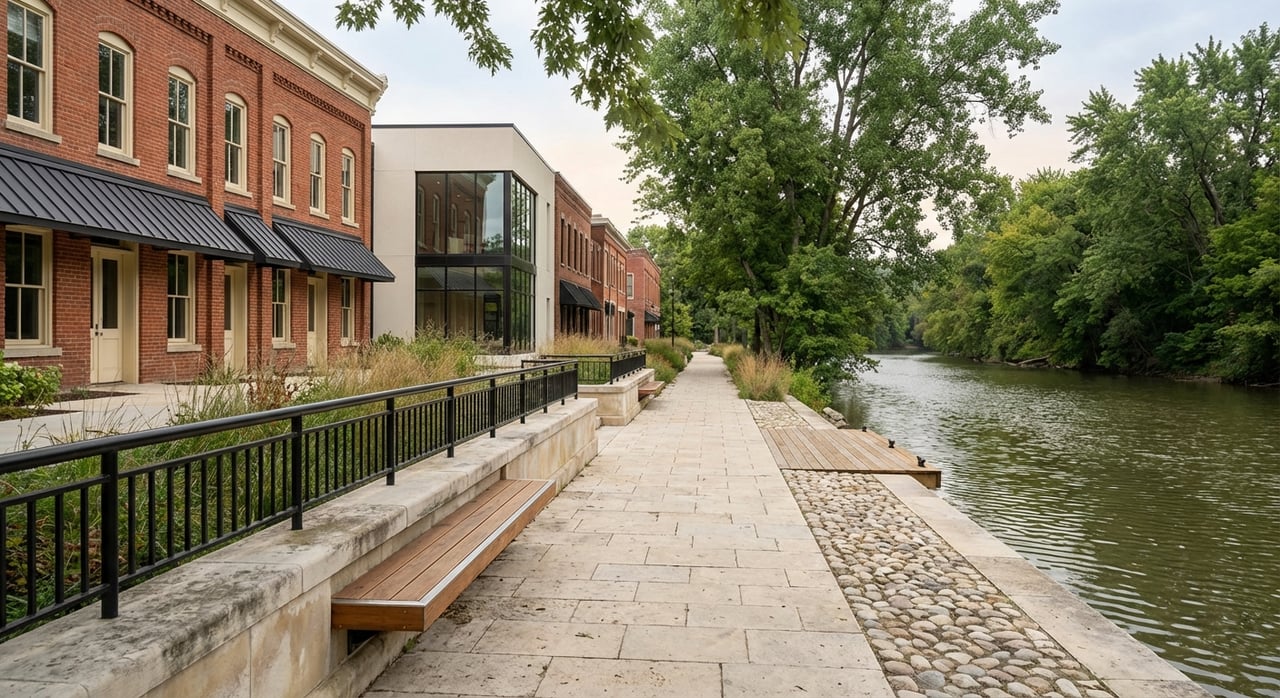
Together, the Lift Bridge, Lowell Park and the historic main street create a recognizable setting. Stone, brick, bluffs and intimate streetscapes deliver that river-town texture many buyers want. If design matters to you, it is easy to picture how modern interiors and historic facades can pair well here.
What riverfront ownership really involves
River living is experience-rich. It also comes with a few specific responsibilities. As you tour, keep these in focus.
Shoreland rules and what you can build
Minnesota’s shoreland standards protect bluffs, setbacks and shore impact zones along public waters. Local ordinances administer these rules, so what you can clear or construct near the water is not the same as a typical in-town lot. Before you plan major landscape changes or a new structure, review the Minnesota DNR’s overview of shoreland classifications and standards and confirm with the City.
Flood maps and insurance
Parts of Stillwater’s riverfront fall within mapped flood zones. The City provides guidance on FEMA Flood Insurance Rate Maps and parcel lookups, and federal flood insurance is available through the NFIP. Always check a specific address on the City’s page for revised flood maps and property lookup so you understand risk, insurance requirements and potential elevation considerations.
Docks, lifts and in-water work
Can you place a dock or boat lift at your property? It depends on parcel specifics and multiple layers of regulation. Many small, seasonal docks are allowed without a DNR Public Waters Work Permit if they meet size and siting criteria, but local shoreland and floodplain rules still apply. Larger or permanent structures often trigger permits and sometimes involve the Army Corps of Engineers. Start early with the Minnesota DNR’s guidance on when you need a permit and coordinate with City planning.
Maintenance and carrying costs
Budget for the realities of the setting. Exterior maintenance can include bluff stabilization, stairways and dock upkeep. Insurance may be higher, especially if flood coverage is required. If the property uses a shared dock or HOA-managed river access, read those documents closely so you understand fees, responsibilities and storage options.
Everyday logistics: from commute to schools
Commute to the Twin Cities
Stillwater sits roughly 25 to 30 miles from the downtown cores of Minneapolis and St. Paul. Typical drive times run about 30 to 40 minutes depending on destination and traffic. For an example route and distance, see the Travelmath reference for the Stillwater to Minneapolis drive. Many buyers treat this as a flexible commute, ideal for hybrid schedules.
Schools and enrollment
Most neighborhoods are served by Stillwater Area Public Schools, Independent School District 834. For district coverage across Washington County and to locate current contacts, use the county’s School Districts page. Always verify assignments and program details directly with the district.
Visitor energy, local balance
Stillwater has a small-city population and a steady visitor economy. On peak summer weekends, restaurants and riverfront patios are lively, and weekday mornings feel quieter and more residential. If you prefer a year-round sense of activity, downtown proximity can be a plus. If you want more privacy, hilltop streets a few blocks up from the river can feel distinctly calmer while keeping you close to the water.
Market snapshot, in plain English
If you are scanning listings, you will notice wide ranges in price, lot size and vintage. Aggregated sources in late 2025 and January 2026 placed Stillwater’s overall median sale price in the mid to high six hundreds. Methodology and geography matter, so citywide figures may not reflect the exact micro-market you are targeting.
What moves the needle near the river:
- Historic, smaller-lot homes downtown often price differently than newer construction farther inland.
- True riverfront with private access or dock potential can command premiums.
- Views, elevation and flood-zone status influence both desirability and insurance costs.
When you get serious, compare recent sales for your block or view corridor rather than relying on broad averages. The right comps will capture the value of river proximity and specific site conditions.
Is Stillwater riverfront right for you?
You might be a fit if you want:
- Daily access to water, trails and a walkable downtown.
- A home with history, character and the option to blend modern design with classic forms.
- A balanced pace that stays lively in summer and curated in winter.
Bring this quick checklist to your first tour:
- Walk the lot lines and note elevation changes, stair runs and shoreline access points.
- Ask for flood map data, elevation certificates and insurance estimates.
- Confirm shoreland rules that apply to landscaping, additions or accessory structures.
- Verify if docks or lifts are permitted and what approvals are required.
- Clarify any shared access, HOA rules or seasonal storage plans for boats.
When you take a moment to stand at the river’s edge at dusk, it is clear why people choose this place. The St. Croix sets a slower clock and a memorable backdrop for daily life. If you want to explore homes that match that feeling and support your lifestyle, connect with Juan Rivera for a guided, design-forward search.
FAQs
How close is Stillwater to Minneapolis and St. Paul for commuting?
- Stillwater is about 25 to 30 miles from the downtown cores, and typical drive times run 30 to 40 minutes depending on traffic; see an example route via Travelmath’s Stillwater–Minneapolis drive page.
What is daily life like along Stillwater’s St. Croix riverfront?
- Mornings are walkable and relaxed near Lowell Park and the Lift Bridge, warm months bring active boating and patios, and winter features curated events like the World Snow Celebration.
Can I add a dock to a Stillwater riverfront property?
- Many small, seasonal docks are allowed if they meet state criteria, but parcel specifics and local rules apply; start with the DNR’s guidance on when you need a permit and confirm with the City.
Do I need flood insurance for a riverfront home in Stillwater?
- It depends on the property’s flood zone; use the City’s revised flood map lookup to check an address and then consult your insurer on NFIP options and requirements.
What kinds of homes line the Stillwater riverfront and hills?
- You will see Victorian-era houses, brick mill-era structures and conversions near downtown, plus cottages and later single-family development up the hills, creating a varied, historic river-town texture.
What should I know about shoreland rules before buying?
- Shoreland standards affect setbacks, bluff protection and shoreline changes; review the DNR’s shoreland classifications and standards and verify local ordinances for the parcel you are considering.