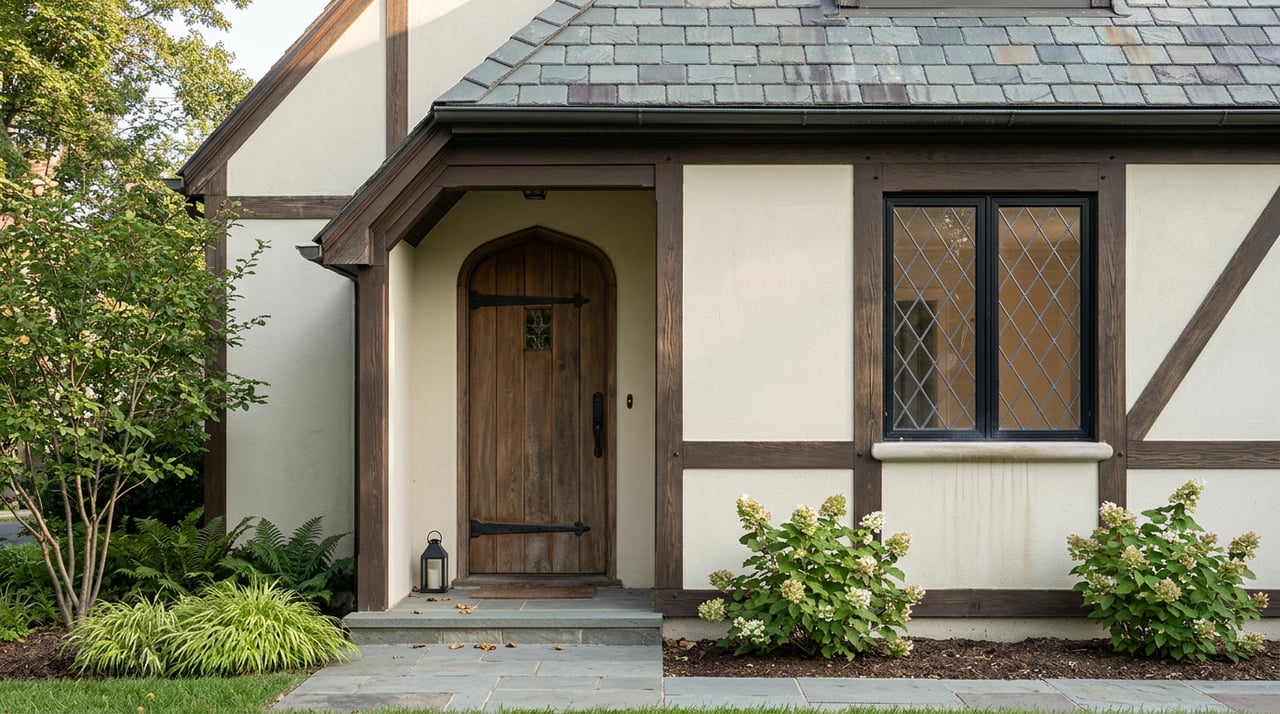
Ask a longtime Kenwood resident what makes the neighborhood work and you will hear some version of the same answer: nothing here changes much. The streets are the same width they were in 1910. The houses along Kenwood Parkway have been maintained, not reinvented. Lake of the Isles still reflects the same maples every October. That reputation for standing still is real, and most people who live here would tell you it is the whole point.
This year quietly complicated that story. Two of the things residents rely on most, a trail corridor and a neighborhood restaurant, both were disrupted for a while and both returned. But "back" turned out to be doing more work in that sentence than anyone expected.
The Trail Everyone Uses Without Thinking About It
For almost seven years, the Kenilworth and Cedar Lake Trails, the corridor that runs along Kenwood's western edge and connects it to Cedar Lake Park, Lake of the Isles Park, and the Midtown Greenway, were partially or fully closed for construction of the Southwest Light Rail Transit project. Heavy construction started in 2019. The trails reopened in full this past winter, and Minneapolis officials describe the corridor as the most intensely used trail in the city's park system, a claim backed by numbers: before the 2019 closure, the Kenilworth stretch alone carried an estimated 2,100 cyclist trips and 400 pedestrian trips on an average day, according to the Minneapolis Park and Recreation Board. That is not a lightly used bike path. That is a commuting artery for a big chunk of southwest Minneapolis, and for almost seven years, parts of the route were disrupted.
What came back is not identical to what closed in 2019. More than a thousand trees were removed to make room for the expanded rail corridor, so stretches of the trail that used to run under a shaded canopy now run more exposed. New fencing lines sections of the route. A zigzag detour still sits at the point where the Midtown Greenway meets the Kenilworth connection south of Cedar Lake, and work continues near Target Field, where fencing narrows the Cedar Lake Trail. The rail line itself is still in its testing phase as of this summer, with a passenger opening targeted for 2027, so anyone riding the Kenilworth stretch this fall should expect construction fencing and occasional train testing to remain part of the scenery for a while longer.
None of that makes the reopening less significant. Getting a full daily commuting and recreation corridor back after the better part of a decade is worth noticing, especially for the residents who spent seven years finding worse, slower ways to get downtown or over to the Chain of Lakes. It just means the trail that reopened is a rebuilt version of the one that closed, not a restoration of it.
Two Doors Down, The Math Didn't Work Out The Same Way
The Kenwood, the neighborhood's small brunch-and-pasta restaurant on West 21st Street, went through its own version of the same story this year, on a much smaller scale and a much faster timeline.
The restaurant closed for what its staff called a winter vacation and reopened in May with a full renovation behind it: an updated kitchen, refinished floors, new banquette seating along the wall, and, for the first time, a full bar where a smaller lounge area used to be. The plaid wallpaper that regulars associated with the old space is gone. The pistachio butter pancakes are not.
Local reviewer Jason Suss, who covers the neighborhood's restaurant scene for the community paper Hill & Lake Press, put the reopening in context that made it read as more than a cosmetic update. "In a rough season for neighborhood restaurants, it makes a strong case for walking over," he wrote, noting that the news of The Kenwood's refresh arrived alongside word that The Lowry, another longtime neighborhood spot, had closed, and that Cardamom had announced its own closure. The Kenwood has operated in its current form since 2012, with ownership changing hands in 2021. Getting through this particular stretch with a renovation rather than a closing notice was not a given.
That is the same shape as the trail story, compressed into a single season instead of seven years. A neighborhood fixture went away temporarily, came back physically changed, and its survival happened against a backdrop of other, similar places that did not make it.
What "Back" Actually Means Here
Put the trail and the restaurant side by side and a pattern shows up that neither story tells on its own. Kenwood's identity is built on the idea that its physical fabric holds steady while the rest of the city changes around it. This year, two of the specific things that make up daily life here, the trail you use before work and the booth you sit in for Saturday brunch, were both rebuilt rather than simply reopened, and both survived a stretch where their neighbors did not.
A smaller version of the same thing happened at Kenwood School, where Zoran Mojsilov's Grandma's Mountain sculpture, a fixture near the building for years, left its longtime spot this year according to Hill & Lake Press. It is a minor landmark compared to a commuter trail or a brunch spot, but it belongs in the same category: a piece of the neighborhood's fixed scenery that quietly moved.
None of this contradicts Kenwood's reputation for stability. The housing stock did not change. The parkway did not widen. But the version of "stable" that residents experienced this year had more turnover built into it than the neighborhood's usual story admits, restored infrastructure that looks and functions differently than what it replaced, a restaurant scene where The Kenwood reopened after a renovation while other spots closed, and a small sculpture that is no longer where it used to be.
What To Expect Through The Rest Of The Year
The Kenilworth Tunnel and the rest of the Green Line Extension are still working through testing this year, so residents biking or walking the reconnected trail should expect fencing, signage, and the occasional test train through the fall, with full passenger service not expected until 2027. The detour at the Midtown Greenway junction is likely to persist for a while yet.
On the restaurant side, The Kenwood's Saturday brunch has been running at capacity since its reopening, enough that even its own reviewer flagged the noise level and hoped for acoustic panels. Whether that popularity holds through a full year, with two other neighborhood spots gone, is the kind of thing only time will answer.
For residents who want a hand in shaping what comes next, the Kenwood Neighborhood Organization coordinates the volunteer-run events and communications that have kept the neighborhood connected for decades, including the Hill & Lake Press itself, which has covered Kenwood since 1976. It is worth signing up for the newsletter if the last few paragraphs were the first you are hearing of any of this.
Kenwood is not becoming a different neighborhood. But the specific, physical things that make it feel like Kenwood, the trail, the restaurant row, even a sculpture outside the school, went through more this year than the neighborhood's quiet reputation would suggest. Paying attention to what actually changed, rather than assuming everything simply resumed, is the more accurate way to understand the place right now.
If you're the kind of resident who likes knowing the neighborhood this well, or you're weighing what a home here is actually worth given everything that's shifted underneath it, MN Living Real Estate spends its time exactly here, in the specifics. Let's connect.